Jesus Shepherd 20oz Tumbler Wrap
A Quiet, Warm First Impression—Not Flashy, But Full of Heart
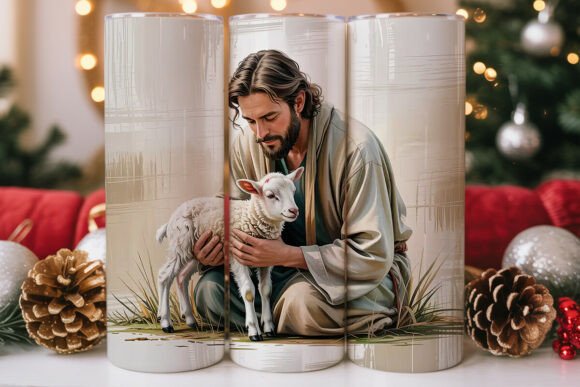
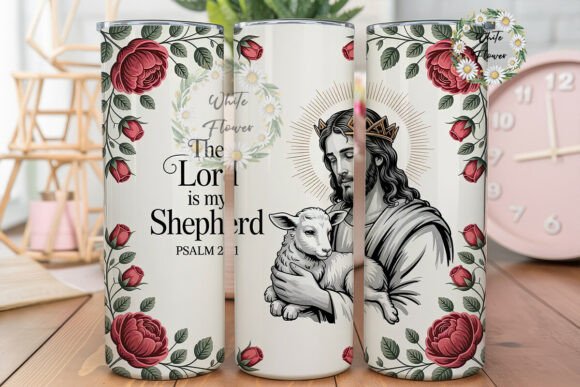
When I opened the Jesus Shepherd 20oz Tumbler Wrap file, what struck me first wasn’t technical precision—it was mood. Soft curves, gentle spacing, and a centered composition that breathes. It’s not a bold, graphic statement; it’s a tender, reverent image—Jesus holding a lamb, with subtle shepherd motifs framing the scene. No excessive ornamentation, no crowded borders. That simplicity is its strength—and its warning. This design doesn’t shout. It invites pause. Which means it’ll shine on products where quiet intention matters: baby blankets, nursery wall hangings, linen tea towels, or personalized gifts for baptisms and confirmations.
Where It Lives Best in Real Embroidery Projects
I tested Jesus Shepherd 20oz Tumbler Wrap on a medium-weight cotton twill tote bag—same fabric I use for boutique client orders—and the result felt grounded, sincere, and handmade in the best way. The proportions scaled beautifully at 4.5" wide, holding clarity without stiffness. On a heather gray sweatshirt? Equally strong—especially when stitched with matte cotton thread that softens the edges just enough. I also ran it as an embroidered patch (cut-away stabilizer + tear-away top), and the satin stitch around the central figure held clean lines without puckering.
It works well for small business owners who sell faith-based merchandise: think holiday gift sets (a matching embroidered pillow cover + kitchen towel), baptism keepsakes (stitched onto a muslin swaddle blanket), or Etsy listings featuring “gentle Christian embroidery” as a curated aesthetic—not religious branding, but spiritual warmth. As a machine embroidery design, it reads clearly even at smaller sizes (3.75"), making it viable for baby onesies or cap fronts—but only with careful digitizing review (more on that below).
Where Caution Is Needed—Not Flaws, Just Fit
This isn’t a one-size-fits-all embroidery file. Its gentle curves and moderate detail demand thoughtful placement. On highly textured fabrics like bouclé knit or thick terry cloth, the fine lines in the lamb’s fleece or the folds of the robe can blur—so I’d avoid using Jesus Shepherd 20oz Tumbler Wrap on plush robes or fuzzy blankets unless you’re willing to adjust stitch density manually. On stretchy fabrics like jersey or lightweight knits? Add light cut-away stabilizer *and* baste the hoop tightly—otherwise, the outer frame elements may skew slightly during stitching.
Dark fabric backgrounds reveal another nuance: the inner fill stitches are dense enough to cover, but the delicate running-stitch accents (like the small cross motif tucked into the lower corner) fade if thread contrast is low. I recommend testing those details in black-and-white mockups before finalizing a dark-fabric run. And while it’s labeled a tumbler wrap, don’t assume it’s optimized for curved surfaces out of the box—caps or mugs require re-digitizing for distortion control. Use it as-is on flat or gently contoured items only.
What It Adds to Your Finished Product—Beyond Aesthetics
Customers notice sincerity faster than symmetry. When I added Jesus Shepherd 20oz Tumbler Wrap to a line of embroidered linen napkins for a local church fundraiser, buyers didn’t comment on stitch count—they said, “It feels like something my grandmother would’ve chosen.” That emotional resonance lifts perceived value. It signals care, not just craft. For Etsy sellers, that translates to fewer returns, more repeat buyers, and stronger brand consistency across seasonal collections (e.g., pairing it with olive branch or dove motifs for Easter or Advent).
It also supports trust. Because the design avoids cliché visuals—no neon halos, no cartoonish proportions—it aligns with mature, tasteful handmade product expectations. That matters for boutique branding and wholesale partnerships. And for digital product sellers: this is a design people will save, revisit, and layer into larger compositions—not discard after one use. As a digital embroidery file, it’s versatile enough to serve both personal projects and commercial embroidery work—if licensing permits resale of finished items (always verify before listing on your shop).
Practical Designer Notes Before You Stitch
- Always test on scrap fabric first—especially if combining with other designs or using non-standard thread (e.g., metallic or variegated).
- Check thread color contrast on both light and dark backgrounds. A warm ecru works beautifully on oatmeal linen; navy or charcoal pops on cream cotton.
- Review stitch density in the robe folds and lamb’s wool—some versions of this motif overfill, causing stiffness. If yours feels heavy, reduce fill density by 5–8% in your editing software.
- Confirm hoop size compatibility. While it fits standard 4x4 hoops comfortably, double-check if your version includes alternate sizes—some sellers offer 5x7 variants for larger tote or apron placements.
- Inspect small details under magnification: tiny eyes, cross outlines, and script lettering (if present) must be legible at your intended scale.
- Use proper stabilizer: medium-weight cut-away for knits, tear-away for stable wovens, and fusible + tear-away for lightweight fabrics like voile or chambray.
- Test in printable mockups—not just digital previews—to assess how the design interacts with real product photography lighting and texture.
- Verify licensing terms before selling finished embroidered items or bundling Jesus Shepherd 20oz Tumbler Wrap into design asset packs.
Final Thought: A Design That Earns Its Place
Jesus Shepherd 20oz Tumbler Wrap won’t dominate a craft fair table. But it will linger in a customer’s memory—folded into a gift box with a handwritten note, stitched onto a child’s first Bible cover, or framed beside a hospital bed. It’s a reminder that some embroidery files aren’t meant to dazzle; they’re meant to hold space. For designers building a catalog of meaningful, commercially viable design assets, this one earns its spot—not because it’s trendy, but because it’s true.