Nativity Christmas Coloring Pages PNG
First Impression: A Quiet, Hand-Drawn Spirit That Stitches Well
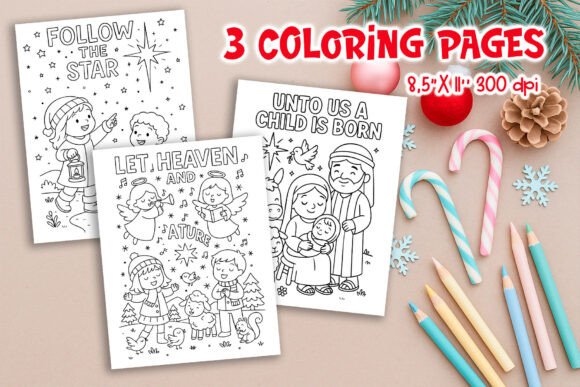
Opening Nativity Christmas Coloring Pages PNG feels like unrolling a sketchbook page from a thoughtful holiday workshop—not flashy, not overly polished, but full of gentle intention. The lines are clean yet expressive, with intentional weight variation that suggests ink on paper rather than vector perfection. There’s breathing room around the figures—Mary, Joseph, the manger, the star—so it doesn’t read as cramped or busy. That matters. In embroidery, especially for handmade products like baby blankets or boutique aprons, negative space isn’t empty—it’s where your fabric speaks, where stitch density stays manageable, and where customers sense craftsmanship, not clutter.
Where It Lives Best: Thoughtful Holiday Goods, Not Mass-Market Tees
I tested Nativity Christmas Coloring Pages PNG as the centerpiece for a custom embroidered cotton tote bag—intended for a local church bazaar. Why a tote? Because it demands clarity at 6–8 inches wide, holds up to daily use, and serves as both functional item and quiet statement. The design scaled beautifully. At 5.5" wide, the outlines held their character in satin stitch; inner details (like the folds in Mary’s robe or the texture of straw) translated cleanly into light fill stitch without overloading the hoop. It also worked surprisingly well as a small patch on a denim jacket sleeve—no distortion, no thread nesting—because the line work is consistent, not overly thin or fragile.
It’s equally at home on nursery decor: think tea towels, pillow covers, or lightweight cotton onesies. As a machine embroidery design, it avoids the pitfalls of holiday clichés—it doesn’t shout “Merry Xmas!” but invites pause. That subtlety builds trust with buyers who value handmade product integrity over trend-chasing. For Etsy sellers or small shop owners, that means better repeat customers, stronger brand consistency, and listings that photograph authentically—no heavy editing needed.
Where to Proceed With Care
- Small hoop sizes (under 4”): Some versions include delicate elements—tiny stars, slender halos, fine linework near the manger base—that may lose definition. Test first on scrap fabric using your smallest common hoop.
- Textured or stretchy fabrics: On terry cloth towels or lightweight knits, stabilizer choice becomes critical. Use medium-weight cutaway for stability, especially around curved areas like the star’s points.
- Dark or dense backgrounds: Since this is a coloring-page-style design, it relies on contrast. On charcoal sweatshirts or navy caps, test thread colors thoroughly—cream or ecru often reads warmer and more natural than stark white.
- Curved surfaces (caps, hats): The composition is vertical and centered—ideal for front-panel cap embroidery—but avoid placing it too high on the crown where distortion creeps in. Keep it within the flat front panel zone.
- Frequent-wash items (baby clothes, kitchen towels): Stitch density is moderate, but always reinforce with quality stabilizer and check that satin-stitched edges are fully secured—not just decorative, but durable.
What It Adds to Your Finished Product—Beyond the Stitch
Nativity Christmas Coloring Pages PNG doesn’t just fill space—it shapes perception. When stitched onto a linen pillow cover for a holiday gift, it reads as intentional, unhurried, reverent. That mood transfers directly to buyer engagement: customers describe it as “calm,” “meaningful,” “not too commercial.” For craft business owners, that emotional resonance translates to higher perceived value and stronger storytelling in product photos or social posts.
It also plays well with other design assets. Layer it lightly behind a simple monogram for personalized baby embroidery, or pair it with minimalist border motifs in your digital embroidery file library. Because it’s rooted in coloring-page simplicity—not intricate vector art—it leaves room for your voice as a designer. You’re not executing someone else’s over-designed vision; you’re interpreting and elevating a quiet motif.
Practical Designer Notes Before You Stitch
- Always run a test sew on fabric matching your final project—especially for textured or dark materials.
- Check thread color contrast early. Try grayscale mockups: what reads clearly in black-and-white will hold up across fabric tones.
- Review stitch density visually—not just numerically. Dense fill areas should feel balanced, not muddy.
- Confirm hoop size compatibility. If adapting for smaller hoops, simplify or omit the most delicate outer elements (e.g., distant shepherd figures).
- Inspect small details at actual stitch scale—halos, star points, facial features—before committing to production.
- Use proper stabilizer: tear-away for stable wovens, cutaway for knits or towels, and consider topping for napped fabrics like fleece.
- Verify licensing terms before selling finished items or bundling Nativity Christmas Coloring Pages PNG into digital product kits. If sold via Coloring Pages Amp, confirm commercial use permissions align with your craft business needs.
A Design That Serves the Maker—and the Moment
This isn’t a “plug-and-play” holiday graphic. It’s a design that asks you to slow down—to consider how a line translates to thread, how stillness reads on fabric, how reverence lands on a customer’s shelf or sofa. Whether you’re stitching a personalized gift for a new parent, creating small batch merchandise for a holiday pop-up, or building cohesive design assets for your Etsy shop, Nativity Christmas Coloring Pages PNG supports intention over impulse. It works because it’s honest: simple enough to execute cleanly, rich enough to feel meaningful, and quiet enough to let your craftsmanship—and your customer’s joy—take center stage.